

 https://5705202.fs1.hubspotusercontent-eu1.net/hubfs/5705202/analyse_graph.webp
April 20, 2026
Hoteltrends
Fact Check: Overall Summary for Winter 2025/2026
Strong reserves, but a sluggish spring
is weighing on the bottom line
The winter season has come to a close. The Alpine region is reporting generally positive results, though an excellent start was followed by a subdued late winter. Weakening demand in the spring, along with price wars in March and April, have dampened the final revenue figures.
The 2025/2026 winter season has been fully accounted for. The joint analysis by Kohl > Partner and the revenue management software RateBoard paints a clear picture: The bottom line is a solid, but not outstanding, result. The healthy cushion built up during the peak winter season saved the overall balance sheet. However, March and the Easter business in April fell short of expectations and cost valuable margins.
Demand Trends: A Tough End to the Season
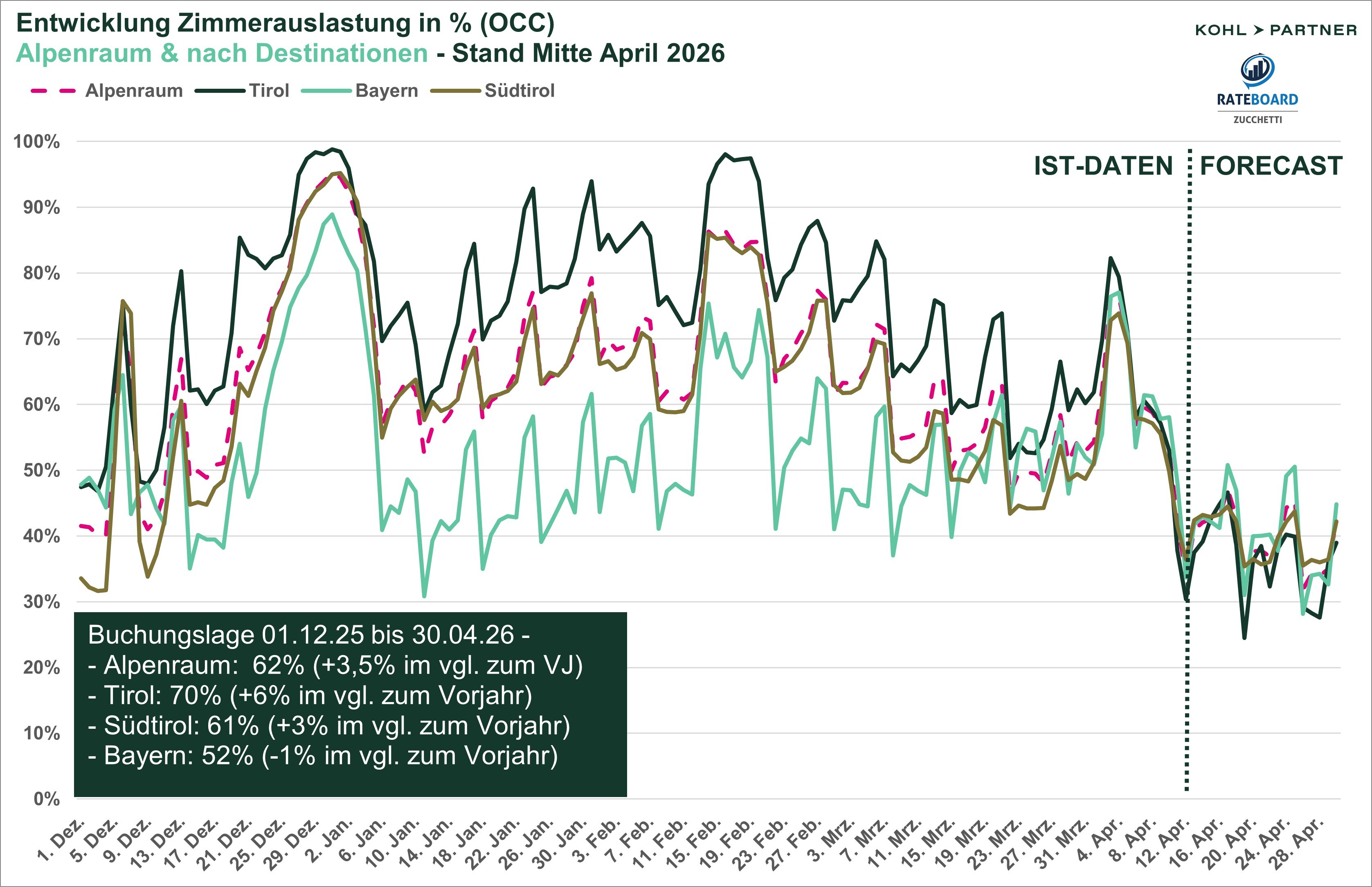
Over the entire winter season, the Alpine region saw a nearly 4% increase in occupancy rates (overall occupancy: 62%). However, this increase was almost entirely driven by the months of December through February. March remained stagnant as a slow transitional month, and the early Easter in April did not yield the expected results.
Regionally, late winter saw a massive divergence:
- Tyrol recorded the highest occupancy rate at 70% on average and achieved the strongest increase of 6% over the entire winter. In March and April, only minimal increases of 2% were recorded.
- South Tyrol, following a moderate March (+1%), ended the Easter period with a 3% increase and ranks second with an overall occupancy rate of 61%.
- Bavaria also lost ground in the spring. March (-3%) and the Easter holiday in April (-4%) were the only factors that pushed the region’s overall figure into negative territory (-1%).
Price enforcement: Last-minute pressure weighs on rates

The average daily rate (ADR) in the Alpine region rose by 7% over the winter to €331. Tyrol even achieved an ADR of €350 for the entire season. However, in March and April, price stability was severely undermined. Businesses tried to compensate for the lack of bookings for March and Easter with last-minute offers.
- South Tyrol shows the greatest resolve in price enforcement, with an 8.5% increase (€347).
- Tyrol boasts the highest profitability from occupancy and price enforcement, with a 4% rise in prices.
- Bavaria maintained its growth rate (+5%), but saw a decline in occupancy.
The 4 Key Takeaways from the 2025/2026 Winter Season
-
Late Winter - A Cost Trap: The extremely strong start was followed by a sluggish spring. Those who didn’t calculate the late opening days with rock-solid precision burned through the profits from the peak season.
-
Price Paradox: The high rates were largely accepted when bookings were made in the middle of winter. In March and April, price enforcement was also driven down by last-minute offers. On-premises additional consumption remained at the stagnant level of recent years.
-
Proactive beats reactive: Top establishments didn’t wait it out but reacted to the weak forecasts as early as January. They launched targeted marketing and sales campaigns for March and Easter and made early cuts to their cost structure.
-
Mixed overall results: A strong winter cushion ensured survival, but the weak spring and lack of additional revenue prevented an outstanding winter season.
According to Thomas Steiner, Managing Partner at Kohl > Partner, the positive overall result should not obscure the challenges:
“We must not be blinded by strong sales figures in the depths of winter, because sales do not equal profit. When prices are driven down by desperate discounts in late winter, while fixed costs remain high, the cost trap snaps shut mercilessly. The industry must analyze the profitability of the spring months more thoroughly and also strategically consider which product developments and target audience strategies need to be implemented here.”
Thomas Steiner, Kohl>Partner
Matthias Trenkwalder, CEO of RateBoard, adds the following regarding the data and pricing strategy:
“The on-the-books data already showed us in January that booking trends for March and the Easter season were extremely flat. This has been fully confirmed: proactive beats reactive. Those who recognized these weak preliminary figures early on and responded immediately through their sales teams were able to secure their volume. Those, on the other hand, who didn’t realize they had empty beds until March found themselves under massive last-minute pressure and had to sacrifice their rates.”
Matthias Trenkwalder, RateBoard

Subscribe To Our Newsletter
Sign up now and receive monthly hotel and revenue management insights.